Oral Cancer Screenings – Fort Worth, TX
Lifesaving Oral Cancer Screenings in Just Minutes
Each year, approximately 450,000 new cases of oral cancer are diagnosed, with about 50,000 to 60,000 occurring right here in the United States. Often, those cases are spotted during regular oral health screenings by a trusted dentist. At Drennan Family Dentistry, we proudly include these vital health evaluations as part of your regular dental checkup. Here’s a closer look at the importance of oral cancer screenings in Fort Worth.
Why Choose Drennan Family Dentistry for Oral Health Screenings?
- Takes Just Minutes
- Included in Your Regular Dental Checkup
- Dental Insurance Welcome
Signs and Symptoms of Oral Cancer
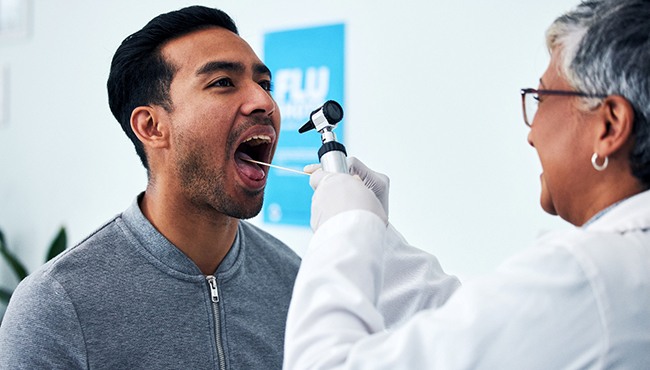
Unfortunately, oral cancer can be hard to detect on your own, because its symptoms often look like the signs of the common cold or other benign mouth irritations, making it difficult to identify if you don’t know what you’re looking for. Common symptoms of oral cancer can include:
- Splotchy or discolored patches of skin.
- Lumps, bumps, or cold sores that don’t clear up or heal after a week or two.
- Firm raised areas of oral tissue.
- Pain or difficulty swallowing.
- A persistent lump in the throat.
- Unexplained oral bleeding or numbness.
- Loose teeth.
- Pain or discomfort while eating.
- Sudden changes in the voice or a persistent sore throat.
What Does a Dentist Look for During an Oral Cancer Screening?

During your oral cancer screening in Fort Worth, your dentist will visually examine your lips, tongue, mouth, and throat for any of the signs mentioned above. If any are detected, your dentist will consider whether they are benign, concerning, or if they should be monitored further to see if they heal or go away on their own.
What Can I Expect During My Screening?

During your screening, your dentist may touch a suspicious area of oral tissue to gauge how firm or sensitive it is. They may also gently palpate your neck to check for throat lumps. If anything suspicious is discovered, you may be asked to return in a few weeks for a follow-up examination. If this happens, there’s no need to panic. It doesn't necessarily mean you have oral cancer, it simply means your dentist would like to investigate the symptoms further and see how they behave over time. From there, you may be referred to a specialist for testing and diagnosis if a closer look is needed.